Low Cortisol Aim and Valorant Phoenix Control
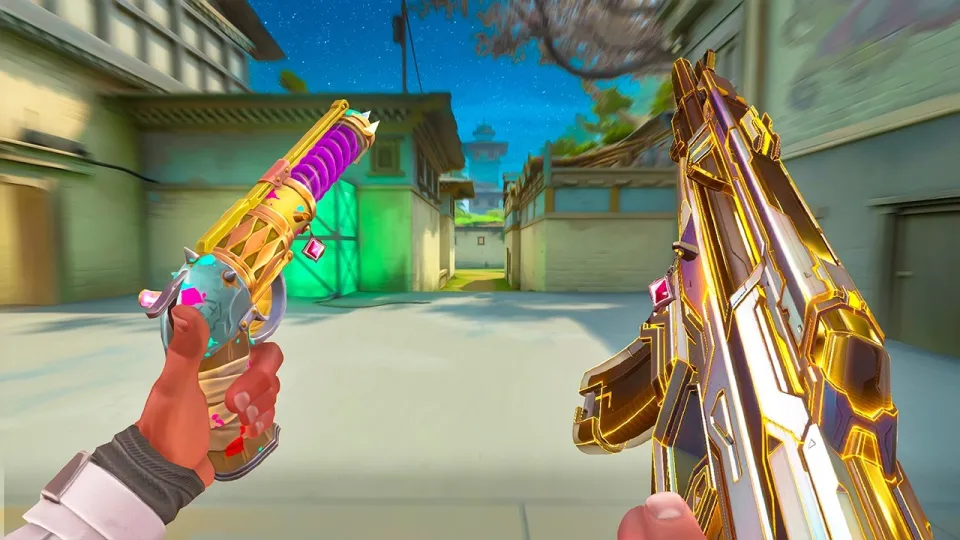
Video: low cortisol aim..
You can order the same kind of articles for your own video to boost it on YouTube and Google. Just message the Telegram bot @sat_sit_bot. It writes articles around your video, embeds the video and publishes them on popular niche websites (no ads). Free trial — 50 articles.
Low cortisol aim in Valorant is a calm, low-tension way of aiming where the hand stays relaxed and the crosshair moves in short, controlled corrections instead of panicked flicks. Rawzu's video "low cortisol aim.." is a Phoenix montage built around exactly that idea: quiet, deliberate aim paired with clean movement. If you want the same smooth performance in your own games, you can optimize your PC for Valorant first, because frame stability is half of what makes calm aim possible.
What low cortisol aim actually means in Valorant
Low cortisol aim is the opposite of adrenaline aiming: the player holds the mouse loosely, keeps the wrist and forearm quiet, and lets the crosshair arrive on target before the click. In Valorant, where a duel is often decided by a single headshot, that half-second of calm is worth more than raw flick speed. The term itself is internet slang — a joke about staying relaxed under pressure — but the underlying skill is real and trainable. It shows up as smooth tracking between angles, small adjustments rather than sweeping swings, and a habit of pre-aiming head level so the shot needs almost no movement at all.
Rawzu's exact Valorant settings and gear
The setup behind the calm aim is documented in the video description, and it is deliberately low-sensitivity. Rawzu plays at 400 DPI with an in-game sensitivity of 0.625, which works out to roughly 250 eDPI — a range that favors control over speed and rewards arm aiming over wrist flicks. The resolution is a stretched 1440x1080, a 4:3 aspect ratio that widens enemy models on screen and makes heads easier to read at distance.
- Sensitivity: 400 DPI / 0.625 (about 250 eDPI)
- Resolution: 1440x1080 stretched
- Crosshair: 1-6-2-2
- Mouse: Logitech G Pro X Superlight 2
- Mousepad: Artisan Zero Soft
- Monitor: Zowie XL2566K at 360Hz
The crosshair numbers follow the standard Valorant format — outline, inner lines, outer lines, dots — so 1-6-2-2 means a thin outline with short, tight inner lines and a minimal outer frame. Combined with a 360Hz panel, the result is a setup where the crosshair is always readable and the image never feels like it is lagging behind the hand.
Why Phoenix fits a calm aim style
Phoenix is an offensive duelist built for hunting enemies and denying their ability to shoot back, which sounds aggressive but actually suits controlled aim very well. His Blaze ability throws a wall that blocks vision and damages anyone standing in it, letting Phoenix cross open ground that would otherwise be watched. Curveball is a flash that curves around corners, so it blinds defenders who are holding an angle even when they are out of direct line of sight. Hot Hands adds a molotov-style zone that heals Phoenix when he stands in his own fire, and Run it Back lets him die, respawn at his marker and keep playing. Together those tools mean a Phoenix player can force duels on his own terms, which is exactly what a low-tension aimer wants: fewer desperate reactions and more pre-planned fights.
How to train calm aim in Valorant
The practical version of low cortisol aim is a routine built on repetition and low physical tension. Start with these steps:
- Fix your sensitivity and stop changing it. Rawzu's 400 DPI / 0.625 is a reference point; pick something in the 200–300 eDPI range and give it weeks, not hours.
- Warm up with static targets before you queue. Ten minutes of slow, deliberate taps at head height teaches the hand to stop early instead of overshooting.
- Practice micro-corrections at range. Aim at a distant bot and move the crosshair a few pixels at a time rather than swinging across the screen.
- Pre-aim every angle. The best calm aimers look like they are barely moving because the crosshair is already where the enemy will appear.
- Breathe and unclench. Grip pressure is the single biggest cause of shaky aim in clutch situations.
- Keep your frame rate stable. Stutter and input lag force the brain into guessing, which is the opposite of calm.
Movement matters as much as the mouse. Viewers of the video repeatedly praise Rawzu's movement rather than his flicks, and that is the correct takeaway: counter-strafing, stopping before you shoot and peeking with intent make aim look effortless because the shot is already lined up.
Common questions about the Rawzu aim style
A few themes come up again and again around this kind of gameplay. First, whether a low sensitivity is required — it is not, but lower sensitivity reduces the chance of overshooting and makes consistency easier to build. Second, whether the stretched 1440x1080 resolution gives an advantage — it widens models and some players find targets easier to read, though it is a preference rather than a rule. Third, whether high refresh rate hardware matters — a 360Hz monitor does not make you accurate, but it removes the visual smear that makes tracking harder. Finally, players often ask how much of this is just editing and music. The clips are short and stylized, but the settings, crosshair and gear are all published, so the style is reproducible rather than magic.
Useful links from the video
- Optimize your PC for Valorant with Hone — the performance tool Rawzu promotes for smoother frames and lower latency.
- Rawzu's original music on Spotify: https://open.spotify.com/artist/6DbATPR1PTNMx7U918bg1Q
- Rawzu's Discord community: https://discord.gg/axnFwyvxp3
Final thoughts on calm aim in Valorant
Low cortisol aim is less a secret technique than a set of habits: a sensitivity you never touch, a crosshair you can read instantly, movement that stops before the shot, and a relaxed hand under pressure. Rawzu's Phoenix clips show the result — duels that look slow and inevitable rather than fast and lucky — and the published settings make the whole thing testable in your own practice range. Copy the numbers, then spend the real time on pre-aim and counter-strafing. If you want the frame stability that supports all of it, start with Hone's Valorant optimization and build the rest from there. Thanks to the Rawzu channel for the source material and the clean demonstration of the style.
Key takeaways
- Low cortisol aim is a calm, low-tension aiming style: smooth micro-corrections instead of frantic flicks.
- Rawzu runs 400 DPI at 0.625 in-game sensitivity on a 1440x1080 stretched resolution.
- Crosshair code shown in the video description: 1-6-2-2.
- Gear: Logitech G Pro X Superlight 2, Artisan Zero Soft mousepad, Zowie XL2566K 360Hz monitor.
- Phoenix is the agent featured: Blaze walls, Curveball flash, Hot Hands and the Run It Back ultimate.
Questions & answers
What does low cortisol aim mean in Valorant?
It is slang for a relaxed, low-tension aiming style where the hand stays loose and the crosshair makes small controlled corrections instead of fast flicks. The goal is consistency under pressure rather than highlight-reel speed. It is trained through pre-aim, micro-corrections and stable hardware.
What sensitivity and crosshair does Rawzu use?
Rawzu plays at 400 DPI with 0.625 in-game sensitivity, roughly 250 eDPI, on a 1440x1080 stretched resolution. His crosshair values are 1-6-2-2. His mouse is a Logitech G Pro X Superlight 2 on an Artisan Zero Soft pad, with a Zowie XL2566K 360Hz monitor.
Do I need a 360Hz monitor to aim like this?
No. A high refresh rate monitor makes tracking smoother and reduces visual blur, but accuracy comes from sensitivity control, pre-aim and movement discipline. A stable frame rate matters more than the panel's maximum refresh rate, which is why PC optimization is worth doing first.
Why is Phoenix a good agent for a calm aim style?
Phoenix can force fights on his own terms with Blaze walls, a Curveball flash that bends around corners, self-healing Hot Hands and the Run it Back ultimate. Those tools let him plan duels instead of reacting to them, which suits controlled, low-tension aiming.
Source: low cortisol aim.. · Markdown version